SEO traffic — organic visitors who find your website through search engines — is one of the highest-value traffic sources a business can have. Unlike paid ads, it doesn’t stop when you stop paying. Unlike social media, it’s driven by intent: people are actively searching for what you offer.
But getting it requires a multi-layered approach. Here are the strategies that actually work.
On-page SEO: the foundation.
On-page SEO is the starting point. If Google can’t understand what your page is about, it won’t rank it for the right queries.
The fundamentals haven’t changed much:
• Title tags that include your target keyword and compel clicks
• Meta descriptions that accurately describe the page content (these don’t directly affect rankings, but they affect CTR — which does)
• Header tags (H1, H2, H3) that structure your content logically
• Internal linking that connects related pages and distributes authority across your site
• URL structure that’s clean and descriptive
On-page SEO won’t win you rankings on its own. But without it, everything else you do is less effective.
Content quality: the competitive moat.
Google’s goal is to show the best answer for every query. Your job is to be the best answer.
That means creating content that genuinely solves the searcher’s problem — not content that’s stuffed with keywords or padded to hit a word count. The bar keeps rising. A 500-word overview that might have ranked five years ago now gets beaten by in-depth, evidence-backed guides written by people with real expertise.
A few principles that consistently produce traffic-generating content:
• Answer the actual question the searcher is asking, not the question you wish they were asking
• Be specific. Vague advice doesn’t rank because it doesn’t satisfy search intent
• Include original data, examples, or perspective that competitors can’t easily replicate
• Update regularly. Stale content loses ground over time
Backlinks: still important, but not enough.
Links from other websites remain one of Google’s strongest ranking signals. A backlink is essentially a vote of confidence: another site is telling Google that your content is worth referencing.
That said, the SEO industry has been hyper-focused on backlinks for years, and Google has been steadily reducing their relative weight. Google’s own statements suggest they’re moving toward user experience signals and away from external signals like links.
Backlinks still matter. But they’re one piece of a larger puzzle, and building links alone won’t overcome weaknesses in other areas.
Technical SEO: the infrastructure.
Technical SEO ensures that search engines can crawl, index, and render your pages efficiently. The key areas:
• Site speed. Slow pages lose visitors before they even start reading. Core Web Vitals are a confirmed ranking factor.
• Mobile-friendliness. Google uses mobile-first indexing, so your site’s mobile experience is what gets evaluated.
• Crawlability. If Googlebot can’t reach or render your pages, they won’t rank. Check your robots.txt, sitemap, and JavaScript rendering.
• Structured data. Schema markup helps Google understand your content and can earn rich snippets in search results, which improve visibility and CTR.
The signal most SEOs are overlooking: CTR.
On-page SEO, content, backlinks, and technical SEO are the standard playbook. Most competent SEO strategies cover all four. But there’s a fifth factor that very few people are actively optimizing: click-through rate.
Click-through rate measures how often searchers click on your result when it appears. It’s a direct signal of relevance and user interest.
We’ve collected extensive evidence from Google’s own patents, engineers, and sworn testimony that CTR feeds into ranking systems. Google’s NavBoost system — confirmed during the DOJ antitrust trial — uses click metrics to adjust rankings. The 2024 API leak exposed the specific variables it tracks.
There are organic ways to improve CTR: better title tags, compelling meta descriptions, structured data that earns rich snippets. These are worth doing regardless.
But when you’ve optimized everything you can on the page and still need more CTR, that’s where crowd-sourced click optimization comes in.
Why engagement signals are increasingly important.
Google has been moving in a clear direction. Their ranking systems are placing more weight on how real users interact with search results and less weight on easily manipulated signals like backlinks.
This makes sense from Google’s perspective. Backlinks can be bought, traded, and manufactured. But genuine user engagement — real people clicking on a result and staying on the page — is a much harder signal to fake. (At least, it’s hard to fake with bots. Real humans are another story.)
The trend is clear: strategies that generate genuine user engagement signals will become more important, not less. SEO traffic generation in 2026 and beyond requires thinking about how users interact with your search listings, not just how your pages are built.
Putting it together.
The most effective SEO traffic strategy combines all of these elements:
• Strong on-page SEO that helps Google understand your content
• High-quality content that satisfies search intent
• A healthy backlink profile from relevant, authoritative sources
• Clean technical infrastructure that doesn’t get in the way
• Active CTR optimization that sends engagement signals Google values
SerpClix complements the rest of your SEO strategy by addressing the engagement signal layer. Our network of over 400,000 real human clickers search for your keywords and click on your results — generating genuine engagement that Google processes alongside all your other ranking signals.
No single strategy wins on its own. But when you stack them together, the effect compounds.
SerpClix uses an army of over 400,000 real human clickers to boost your organic CTR. Start your free trial or log in to your dashboard.
Why Boost Organic Search Referrals?
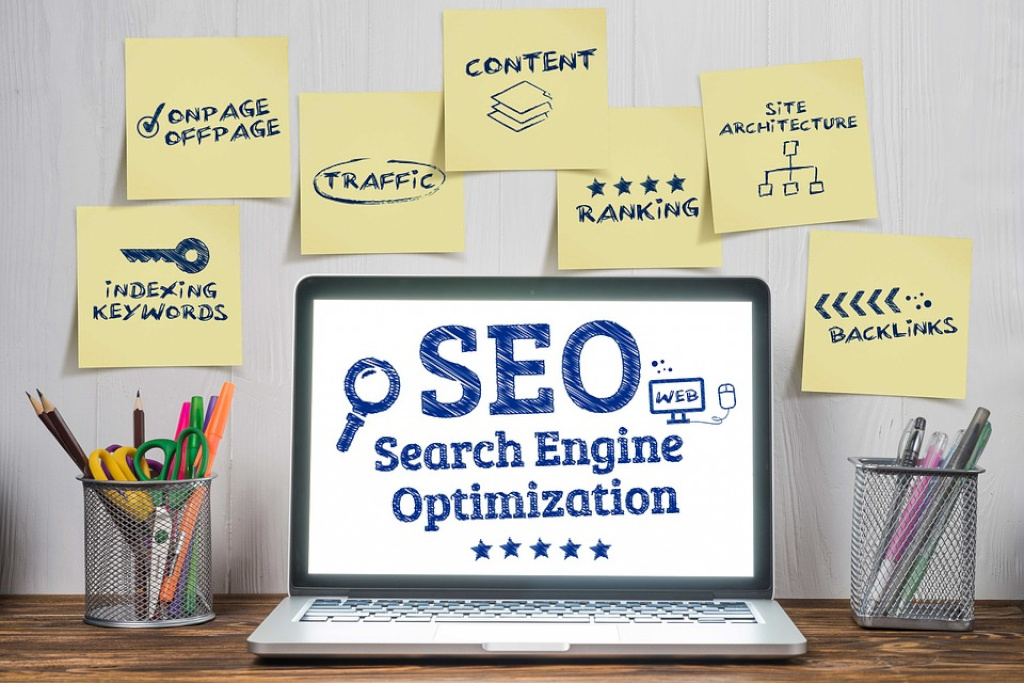
Some people wrongly assume that organic traffic is pointless because you can simply “buy” traffic through various marketing and advertising mediums. However, organic traffic will always be the most important way to drive visitors to a website.
Why? The answer is simple: organic traffic is an essential way of determining that a website is functioning as it should. Plus, organic visitor traffic helps you to build an audience and keep your marketing costs down.
The Road to Organic SEO Success Is Essential But Isn't Easy
There is one fact that you must keep in mind, and that is, organic SEO is harder to achieve today than it was several years ago. That’s due to a combination of the following factors:
- Search engine algorithm updates. Google updates its search algorithms several hundred times each year;
- Search engine innovations. In recent years, Google has made it possible for people to search the Web in new ways, such as through smartphone apps, voice commands, and IoT devices;
- Increased competition. Each year, over half a million new websites get launched on the World Wide Web.
There's No Viable Alternative to Organic Search
Another fact to consider is there is currently (and probably never will be) an alternative to organic search. The simple truth is, when people want to answer a question, they’ll type their query into a search engine.
Most people don’t automatically visit directories (remember those?), nor will they always find the answer to their questions in Wikipedia. Google and other search engines are still the definitive way for Internet users to find answers relevant to their questions.
Organic Traffic Is Highly-Qualified
When someone searches for something on a search engine, they will end up with relevant results. If one of the top relevant links happens to be to a page on your website, those people will most likely click or tap through to it.
Now, consider what might happen if you pay for search placements using Google Ads. Your ads should theoretically show up for relevant searches - but that doesn’t always happen. Consider the following example:
- Your website sells wallpaper with pictures of cartoon fish printed on them;
- Your PPC ads get triggered if someone searches for “cartoon fish wallpaper”;
- If you have the wrong ad settings, your ads could show up for search queries like:
- Fish;
- Cartoons;
- Windows wallpapers.
- Some of the traffic to your site via those ads can potentially be from irrelevant searches.
In contrast, if someone searches for “cartoon fish wallpaper” or “fish wallpaper,” such organic search engine referrals will be more relevant - and thus, you’ll have highly qualified prospects visiting your site.
The Secrets to SEO Traffic Success
Now that you understand why organic traffic plays such a pivotal role in boosting website visitor numbers, you will undoubtedly want to learn the “secrets” to SEO traffic success. The truth is, there aren’t any secrets but more tried and tested common sense techniques.
The following provides a definitive description of what you should be doing for SEO traffic generation:
Keyword Research
Arguably the most essential foundation step of improving any website’s SEO begins with keyword research. You need to find out what people search for and what will most likely drive them to click or tap on your website links.
For instance, if you run a website selling computer parts, people might search for things like:
- PC case;
- Hard drives;
- SSD drives;
- Motherboards;
- RAM;
- Windows 10 Professional.
You can use tools such as Keyword Planner in Google Ads and even Google Trends for inspiration.
Identify All Search Engine Query Opportunities
Have you noticed how Google no longer only brings up ten blue links in any search results pages? The search engine is undoubtedly trying to turn itself from a search engine into a knowledge base in several ways.
For example, it shows a “people also ask” box with related questions and answers underneath the top query result. It’ll also show other related visual elements like images on the right-hand side of desktop search engine results pages (SERPs).
With that in mind, you should consider the other search engine query opportunities to help you boost organic SEO visitors. Optimized images and videos are one such way to enhance your visitor numbers.
Optimize Your Content
Your content needs to provide a useful and rich user experience. Did you know there are many ways to achieve that goal? For instance, pages with a lot of text, images, and videos help provide a better experience to your visitors.
An on-page table of contents is also a good idea for in-depth pages, such as how-to articles, as is a comparison table. Other steps you can take include optimizing your meta description tags and having the right keyword density for each page.
Optimize Your Links
Both internal and external links are crucial to boosting your organic SEO. All links, internal and external, should be relevant. The aim is to increase the user experience by making site navigation easier, which, in turn, increases your search engine ranking.
Be sure to periodically check for “dead” internal links or external links going to pages that no longer exist on your site. With that latter, you should use “301 redirects” to send visitors to current, relevant content.
Monitor Your Search Engine Rankings
Finally, one essential task to carry out periodically is monitoring your search engine rankings. You can use many SEO tools to check where your pages rank for specific search terms and keywords.
That way, you will know which pages rank well and where there is room for improvement. You should also monitor your search engine rankings in collaboration with an analytics tool like Google Analytics.
Paid SEO Techniques to Enhance Organic SEO
While the emphasis should be on boosting your organic SEO, combining your work with paid SEO techniques for enhanced results and a higher ROI can also make sense. Here are three strategies to consider:
Online Sponsorship
You already know about techniques like PPC advertising. But did you know that you can work with social influencers, for example, to boost website traffic? Make sure you only work with relevant influencers for online sponsorship.
Online Collaborations
Another idea is to work with another brand and create a collaborative marketing effort. One idea might be to sell a limited edition product set containing your product and something else from another brand that complements what you offer.
Organic Clicks From SERPs
Lastly, you should consider paying for organic clicks from relevant SERPs. That’s because Google uses clicks or taps on SERPs as part of its search algorithms to add weight to specific results.
Learn the Basics of Generating Organic SEO Traffic, and How Buying Real Organic Clicks From Real Humans (Not Bots) Can Be an Effective SEO Strategy
Let’s face it: the last thing you want to do is end up having Google penalties because the search engine detects suspicious activity involving your website links. It can damage your SEO standing and even your brand’s reputation and credibility.
That’s why it makes sense to generate real organic traffic by having humans click or tap through to your website from relevant search queries. SerpClix is the world’s only service that provides real human beings to visit your site pages through relevant searches.
How Does SerpClix Work?
SerpClix has a hand-picked and vetted collective of over 100,000 people from all countries and languages to help you boost your SEO organic click goals. All searches and clicks/taps are 100% genuine and real, and no bots or VPNs get used.
When you place an order through the SerpClix website, real human “clickers” relevant to your specified region and language will begin searching for your desired keywords and clicking through to your website.
The SerpClix clickers use a web browser extension that tracks when, what, and how they search so that all orders are trackable and verifiable. When clickers visit your site, they will browse the page for a minimum of 60 seconds.
You can also specify an internal page for them to visit after clicking or tapping through to your site from Google. Once they complete the task, they will simply close the browser tab with your website on it and not click back or return to Google in the same browser session.
Find out more about how SerpClix can boost your organic click-through rate (CTR) and improve your SEO rankings with a free no-obligation trial.
Please note: there are no guarantees in search engine optimization, ever. There are innumerable factors that can affect search engine rankings. All SEO efforts can involve an element of risk. SerpClix employs real human clickers, so we think our service is far less risky than trying to use automated or robotic click methods. But, like all SEO strategies, there is an element of risk because Google’s algorithm is unknown and subject to change at any time. For more information please see our FAQs.